

The Brisket Brief: How to Cook a Brisket Low and Slow
There's a reason pitmasters treat brisket like a craft. It's not a difficult cut to cook, but it rewards attention, patience, and a little bit of science. Here's everything you need to know to pull off a genuinely great brisket.
What Makes Brisket Special
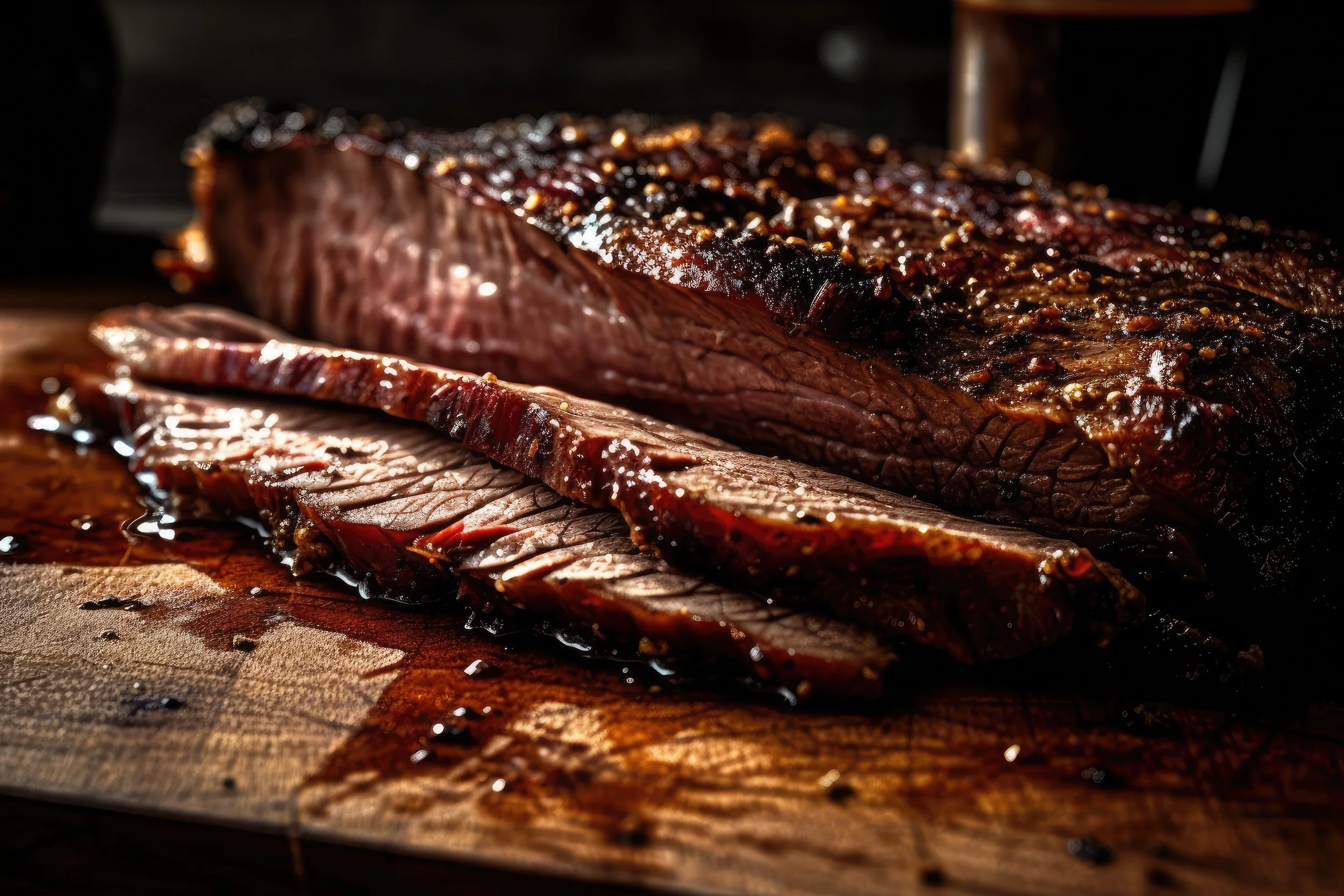
Brisket comes from the chest (pectoral) muscles of the animal, which is one of the most heavily worked areas on a steer. All that work means dense muscle fibers, significant connective tissue, and a good amount of intramuscular fat. In a high-heat environment, that toughness stays tough. But at low, sustained temperatures over several hours, the collagen in the connective tissue breaks down into gelatin, the fat renders, and the whole thing transforms into something tender, rich, and deeply flavorful. You can't shortcut that process, and you wouldn't want to.
What You'll Need
A good quality brisket
At Pine Street Market, we stock 5 lb briskets in our case and online; full briskets are available upon request. Email us at the shop@pinestreetmarket.com
Kosher salt and coarsely ground black pepper—equal parts, mixed together
A reliable instant-read thermometer
Butcher paper (preferred) or foil
We are more than happy to send you home with extra butcher paper to make some meat magic
A smoker, charcoal grill set up for indirect heat, or an oven
The Night Before
Season your brisket generously on all sides with your salt and pepper rub. Don't be shy. Place it uncovered on a rack in the fridge overnight. This dry brine draws out a small amount of moisture, which then gets reabsorbed along with the seasoning. It also dries out the surface, creating “the pellicle.” The pellicle is a thin, slightly tacky layer that forms on the surface of the meat as moisture evaporates and surface proteins bind together; it’s the foundation beneath the bark. Think of it as the anchor that gives smoke something to grip onto during the cook and helps develop a better bark.
The Cook
Temperature: Set your smoker or grill for 225–250°F. If you're using an oven, same target. Low and slow is not a suggestion; it's the whole point.
Wood: If you're smoking, post oak is the Texas standard and pairs beautifully with beef. Hickory adds a bolder smoke flavor; cherry and pecan gives a slightly sweeter, milder profile. Avoid lighter woods like apple for brisket, as they tend to get lost.
Fat side up or down? Honestly, both camps have merit depending on your cooker. Fat side up allows rendering fat to baste the meat in an offset smoker. Fat side down acts as a shield against direct bottom heat. Some people even use a hybrid approach: starting fat side down to protect the meat, then flipping it fat side up once wrapped. Ultimately, either method works. What matters most is managing your heat source and maintaining a consistent temperature.
Timing: Budget 1 to 1.25 hours per pound at 225–250°F. For a 5 lb brisket, that puts you in the 5–7 hour range. Start early and give yourself buffer time; brisket doesn't care about your dinner schedule.
The Stall (Don't Panic)
Somewhere between 150°F and 170°F internal temperature, your brisket will appear to stop cooking. The temperature flatlines, sometimes for hours. This is called the stall, and it's completely normal. It happens because evaporative cooling on the surface of the meat counteracts the heat coming in. Do not crank up the temperature. Do not open the lid repeatedly. You have two options: wait it out, or wrap.
Wrapping in butcher paper reduces evaporation and pushes the brisket through the stall faster. Wrap it snugly, then return it to the smoker or oven, still wrapped, and continue cooking until it reaches probe tenderness around 200–205°F. Unlike foil, butcher paper is porous, so some smoke still gets through and the bark stays drier and firmer.
When Is It Done?
Target an internal temperature of 200–205°F, but temperature is only part of the story. The real test is probe tenderness: insert a thermometer or skewer into the thickest part of the flat. It should slide in with almost no resistance—like pushing into warm butter. If it feels tight, give it more time regardless of what the thermometer reads.
The Rest is Non-Negotiable
This is the step most people skip, and it's a mistake. Once your brisket hits the target temp and passes the probe test, pull it off the heat. Keep it wrapped in butcher paper, wrap that in a towel, and place it in a portable cooler (no ice) for a minimum of one hour; two is better. Resting allows the muscle fibers to relax and reabsorb the juices that have been pushed toward the center during cooking. Cut into it too soon and those juices run right out onto your cutting board.
Slicing
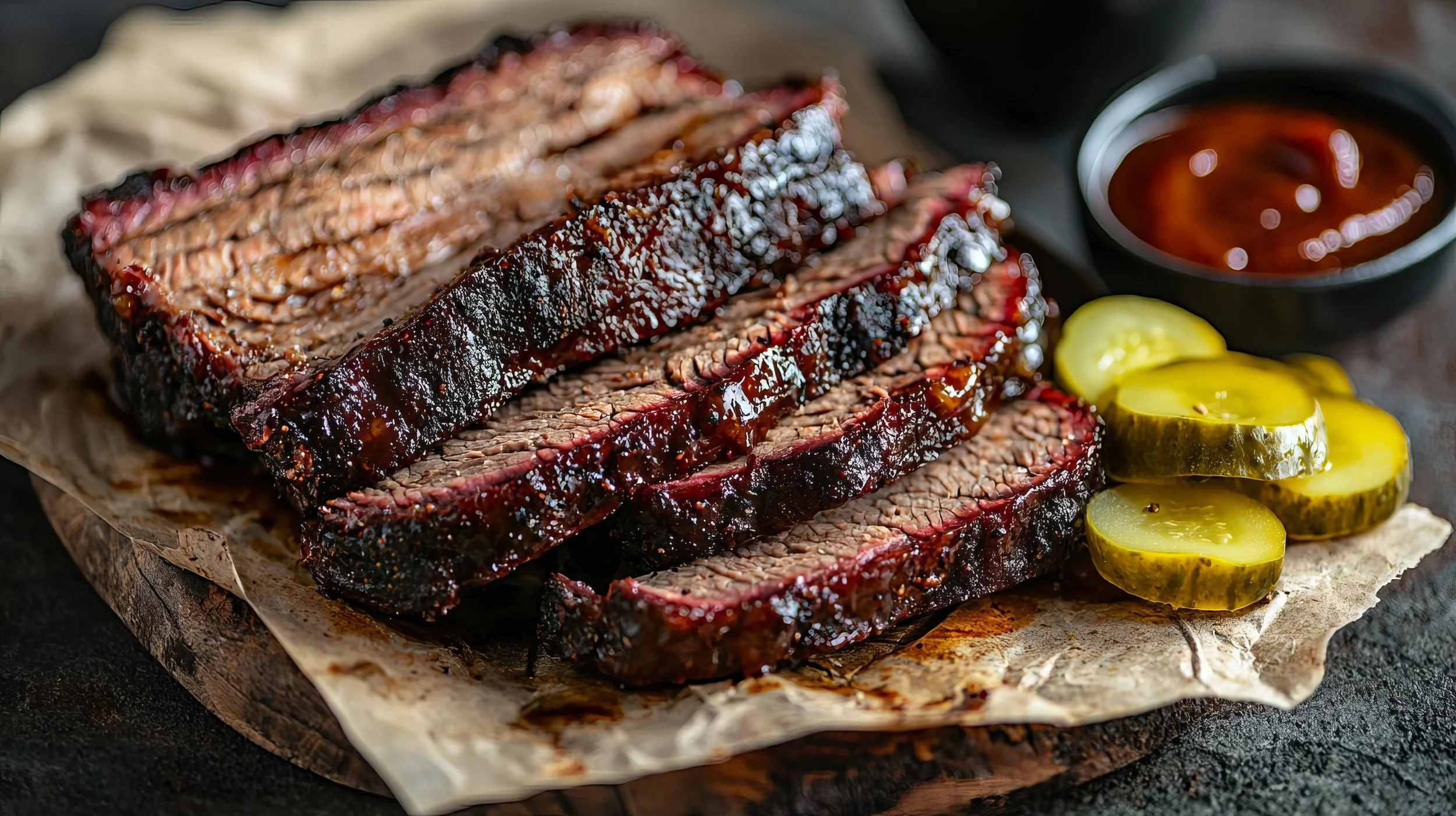
Always slice against the grain. On a brisket, the grain of the flat and the point run in different directions, so you may need to reorient your knife mid-cut. Thin slices for the flat; the point can be cut a bit thicker. And if the point is especially well-rendered and falling apart? That's burnt ends territory—dice it, toss with a little sauce, and consider it a gift.
Questions about the cut? Not sure what to ask for at the counter? Come in and talk to us; that's what we're here for. Not in the area, send Butcher Rusty a message!
Rusty Bowers︱Know Your Butcher︱Pine Street Market
Avondale Estates, Georgia