

More Than Just a Ribeye
Most people think of the ribeye as a single cut. It’s not.
The ribeye loin gives us the classic ribeye steak and prime rib, but there’s more going on in that section than most people realize. It’s one of the most familiar parts of the animal, and for good reason—but it’s also where things start to get interesting if you take it a step further.
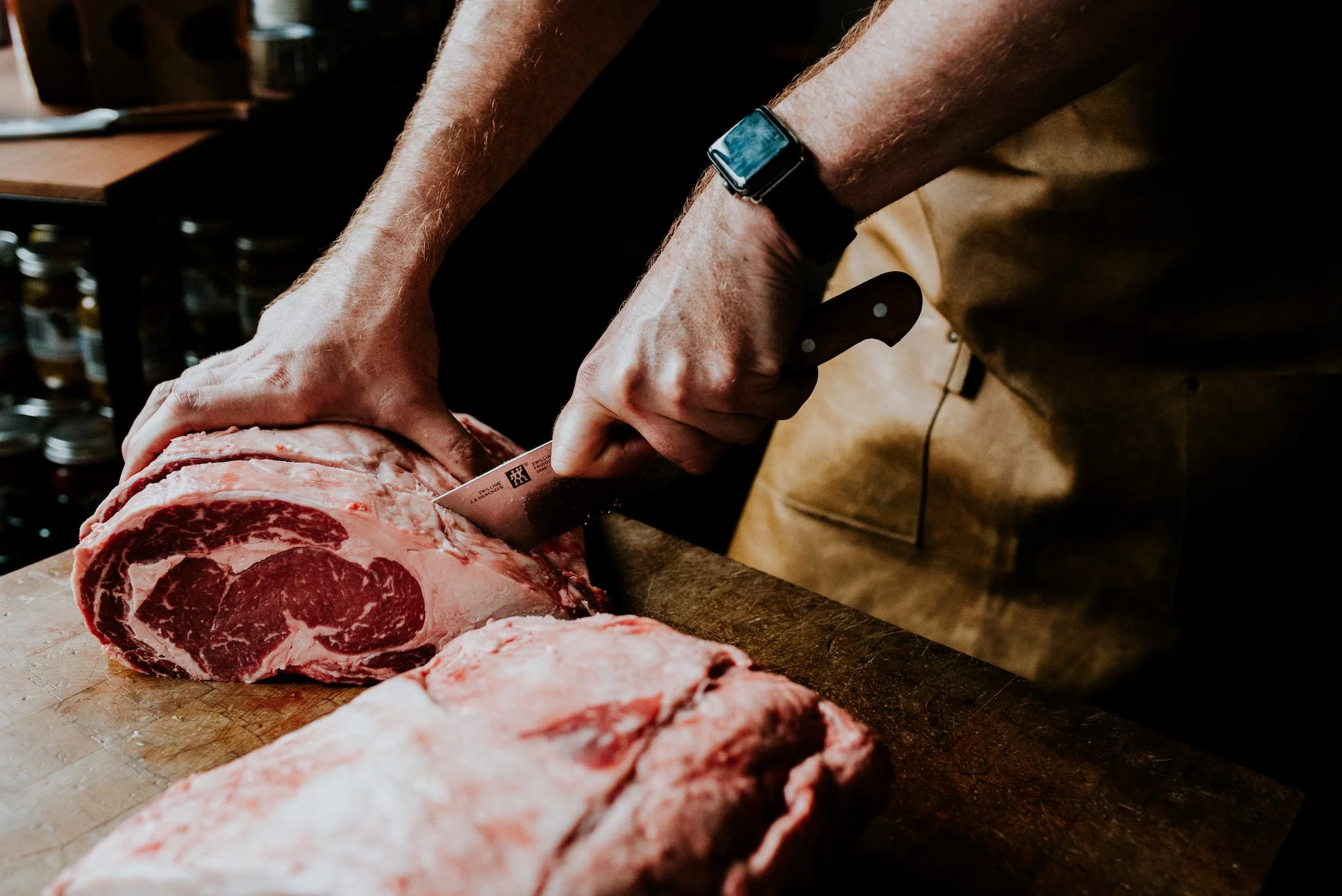
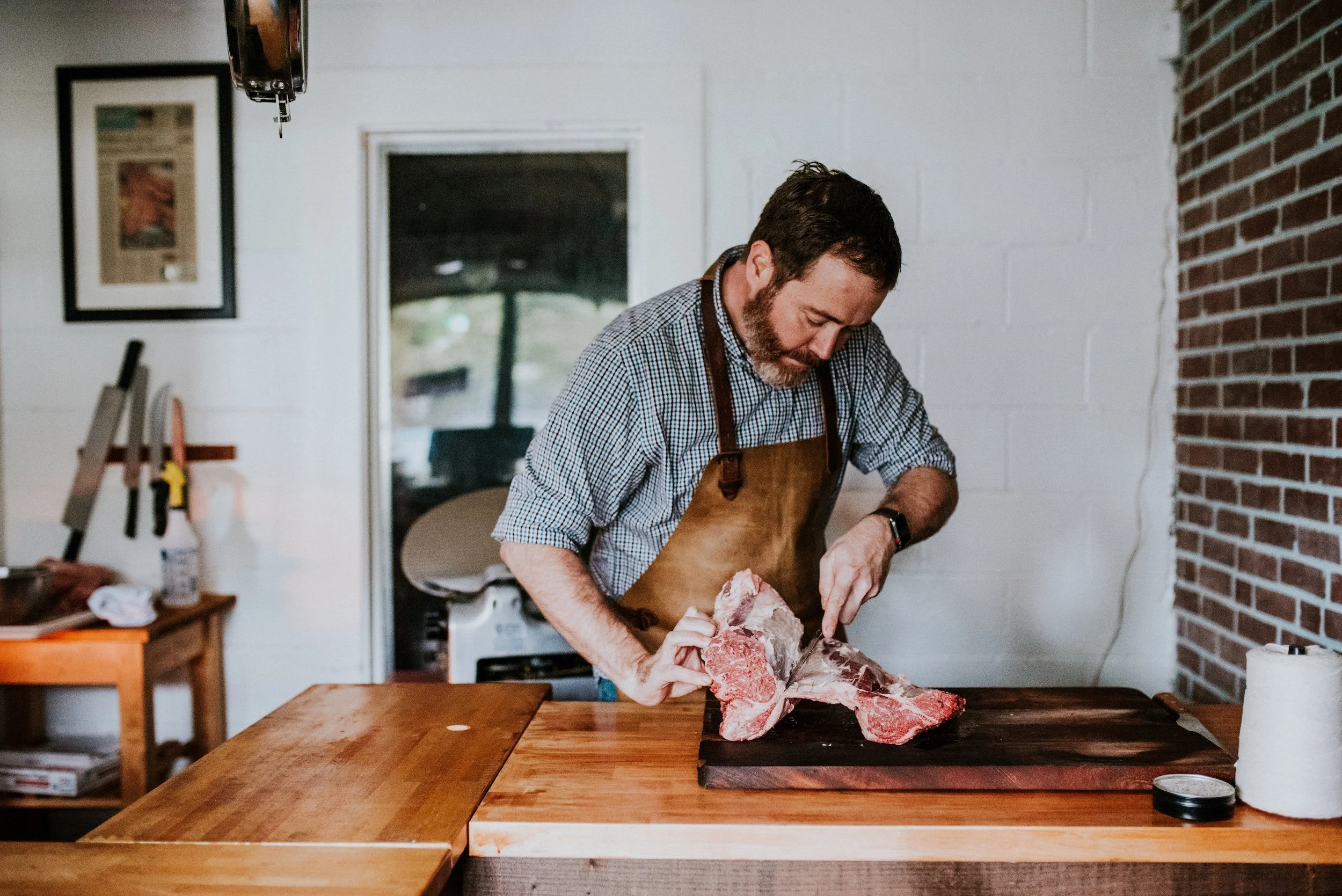
One of the things I like to show is how the ribeye can be separated into two distinct cuts: the ribeye cap (spinalis) and the barrel-cut ribeye. What makes this unique is that you don’t need much force to do it. The natural fat seam does most of the work—you’re really just following the structure that’s already there.
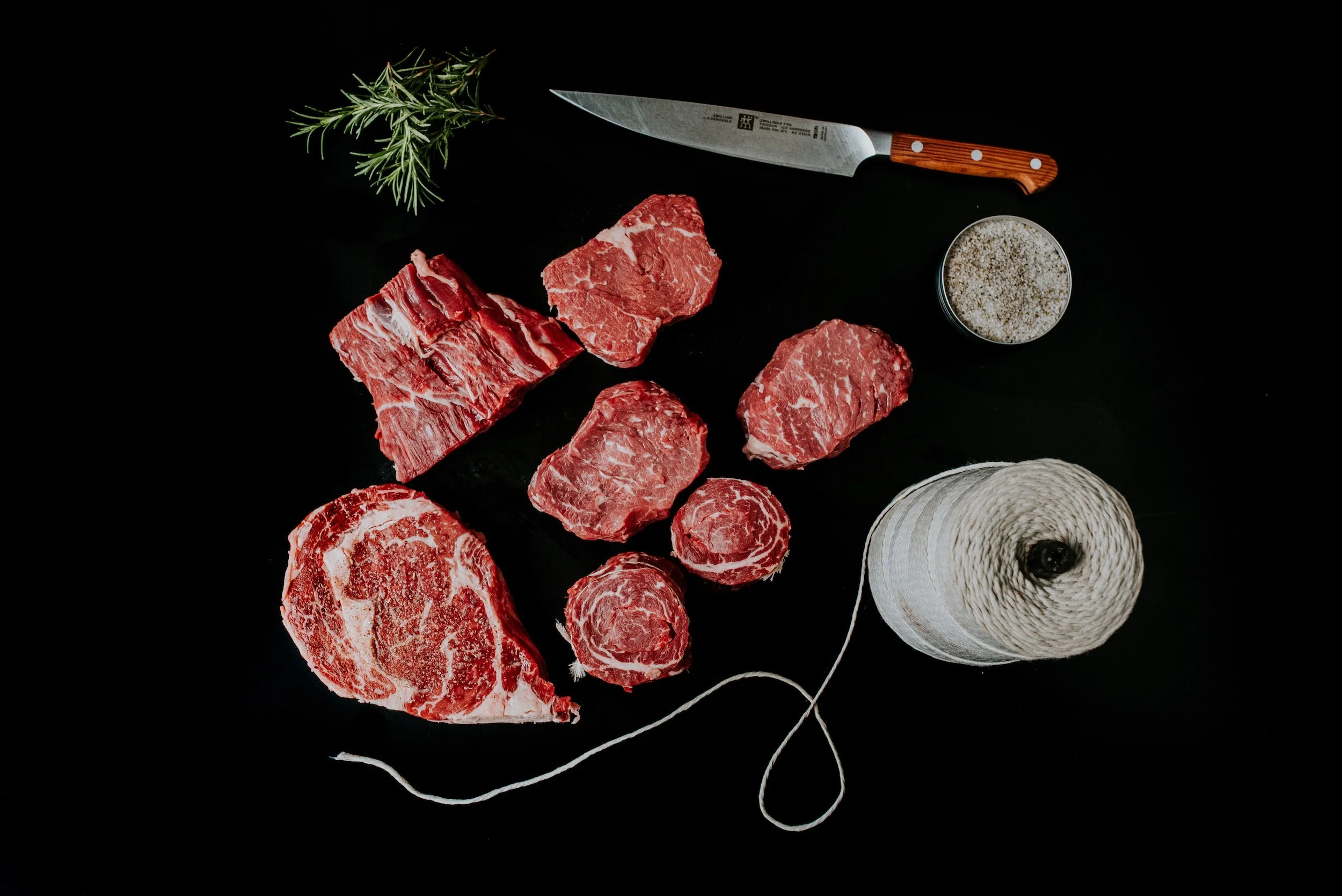
Each cut eats differently. The ribeye cap is rich and tender, with a lot of flavor packed into a smaller piece. The barrel-cut ribeye is more structured, closer in shape to a filet, but still carries the marbling you expect from this part of the animal.
Working this way also ties into a larger part of what we do. As a whole animal utilization butcher shop, the goal is to use everything with intention. That includes not just the primary cuts, but the fat and trim that come off along the way.
One example of that is our red miso beef butter. It started as a way to make use of trimmed beef fat, and turned into something we use regularly. The fat is slowly rendered, strained, and blended with red miso, then finished with butter. It’s simple, but it adds depth in a way that feels natural alongside the meat.
It’s an extension of the same idea—understanding the structure of what you’re working with, and using more of it well.